

Boro Foundry Cuts Pattern Costs by 50% Using 3D-Printed Tooling
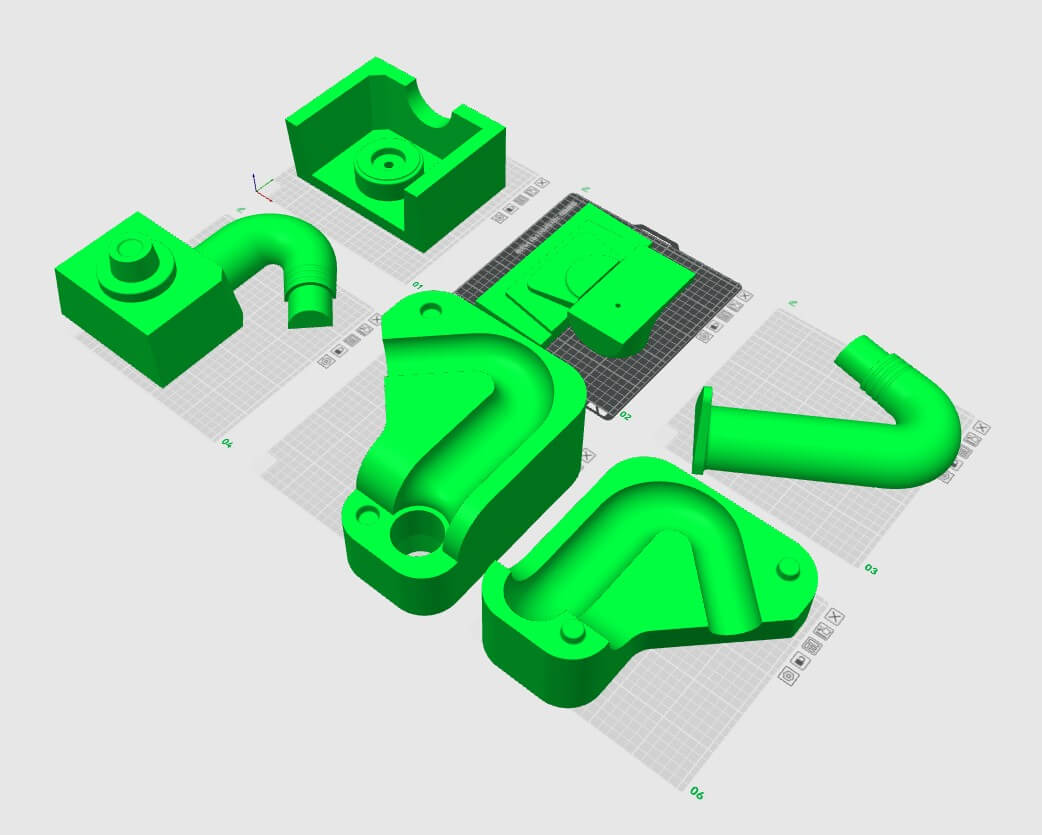
CAD model used to design and segment the pattern for 3D printing
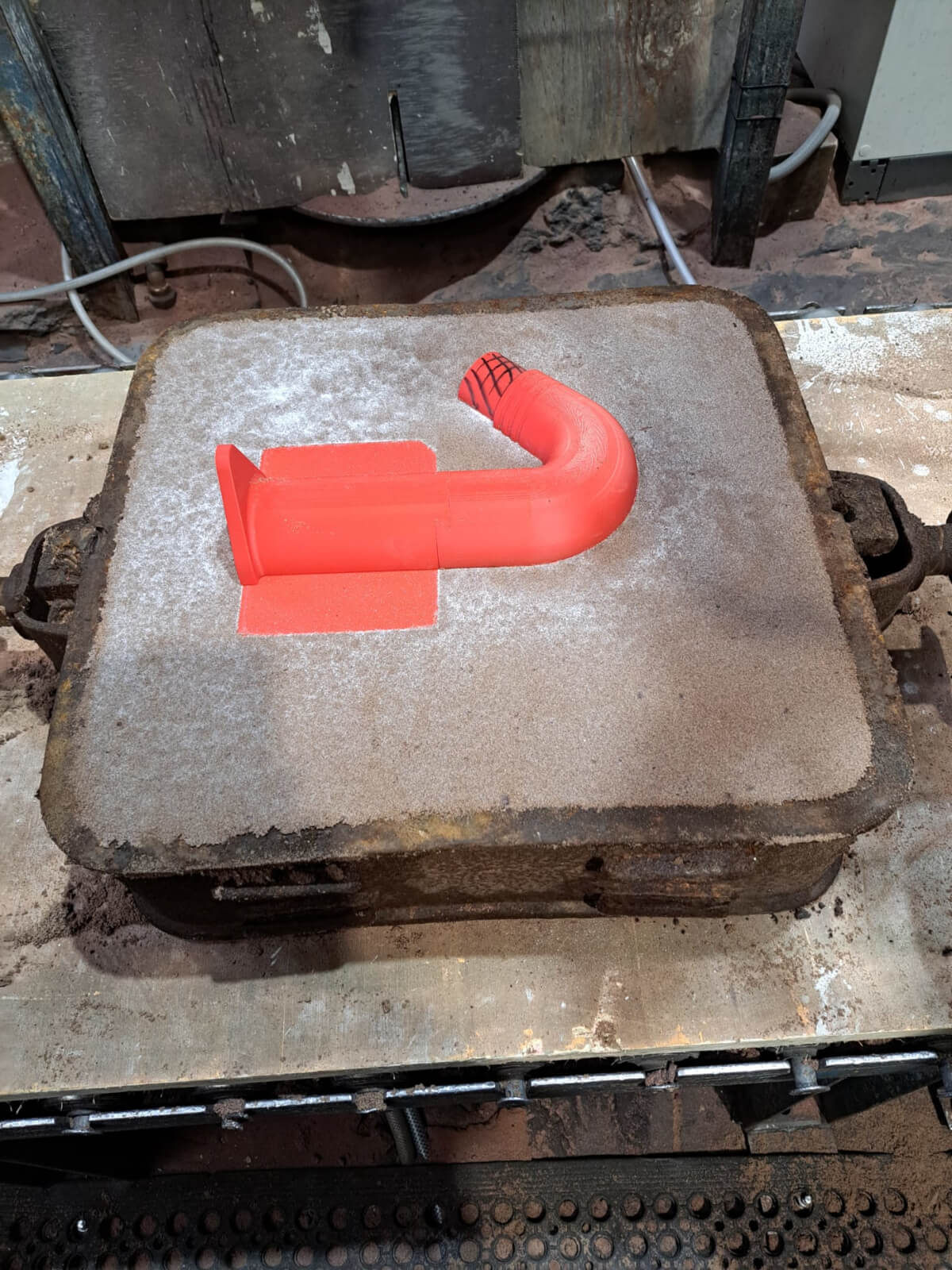
3D-printed pattern assembled ready for moulding
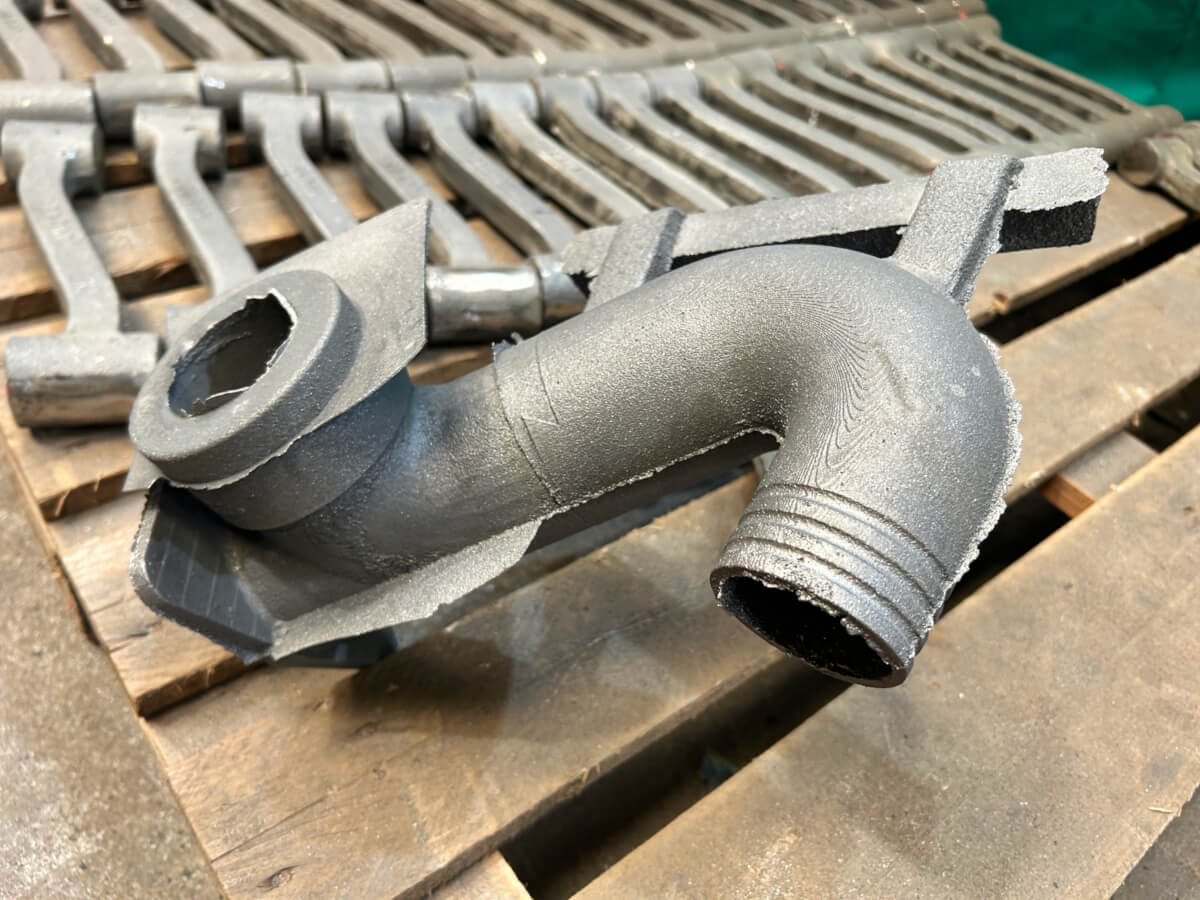
As-cast swan-neck component prior to finishing
Boro Foundry cut pattern costs by 50% using fully 3D printed tooling for a complex heritage locomotive casting.
STOURBRIDGE, WEST MIDLANDS, UNITED KINGDOM, May 18, 2026 /EINPresswire.com/ -- Boro Foundry has demonstrated how modern manufacturing techniques can dramatically reduce the cost and lead time of complex cast components by successfully delivering a bespoke swan neck vacuum pipe casting for a heritage steam locomotive using fully 3D printed pattern equipment.The project involved the production of a one-off replacement component for a historic railway application — a part featuring complex geometry that would traditionally require expensive and time-consuming pattern-making methods.
Vacuum pipe systems are a key feature on heritage locomotives, forming part of the braking system that runs the length of the train. The swan neck vacuum pipe needed to remain faithful to the original design while meeting the functional and durability requirements expected of a working component.
While relatively small in size, the geometry of the part made it particularly challenging to produce using conventional tooling techniques. Traditional pattern-making methods for this type of component were estimated at approximately £1200, making low-volume production difficult to justify economically.
To overcome these challenges, Boro Foundry adopted a fully 3D printed pattern approach, allowing the required tooling to be produced quickly, accurately, and far more cost-effectively.
The pattern equipment — including both the pattern and core box — was designed using CAD software, enabling the geometry to be optimised for the foundry process before production began. Due to the size constraints of the print area, the tooling was split into sections and assembled post-print, demonstrating a modular approach that can also be applied to larger castings.
The use of CAD-led design and additive manufacturing provided several key advantages, including improved manufacturability, reduced tooling complexity, and significantly faster production times. The full 3D printed pattern equipment was produced within a day.
The final component was cast in SG Iron, selected for its enhanced ductility and improved durability compared to traditional flake iron. This made it particularly well suited for an externally mounted locomotive component that may be exposed to impact and environmental conditions during operation.
Technical details of the project included:
• Component: Swan Neck Vacuum Pipe
• Weight: ~13kg
• Dimensions: 280 × 175 × 196mm
• Material: SG Iron
• Casting Process: Airset, loose pattern
• Core Configuration: Single core
• Pattern Method: Fully 3D printed, sectioned and assembled
Once the design was finalised, the project moved from digital development into physical production. The fully 3D printed pattern equipment ensured the complex geometry could be replicated accurately and consistently throughout the moulding and pouring process, transforming the CAD model into a fully functional casting ready for finishing and installation.
By replacing traditional tooling methods with 3D printed pattern equipment, Boro Foundry successfully reduced overall pattern costs by approximately 50%, lowering production costs from an estimated £1200 to around £600 while also significantly reducing lead times.
An additional long-term benefit of the approach is the retention of the CAD data, allowing the tooling to be reproduced quickly and cost-effectively should further castings be required in future.
The project highlights how additive manufacturing and traditional foundry expertise can work together to improve the viability of low-volume and complex castings, particularly in sectors such as heritage engineering, specialist industrial applications, and bespoke replacement components.
Boro Foundry continues to invest in modern manufacturing techniques that allow complex castings to be delivered more efficiently, without compromising on quality, performance, or engineering integrity.
Sam Edwards
Boro Foundry
email us here
Legal Disclaimer:
EIN Presswire provides this news content "as is" without warranty of any kind. We do not accept any responsibility or liability for the accuracy, content, images, videos, licenses, completeness, legality, or reliability of the information contained in this article. If you have any complaints or copyright issues related to this article, kindly contact the author above.
