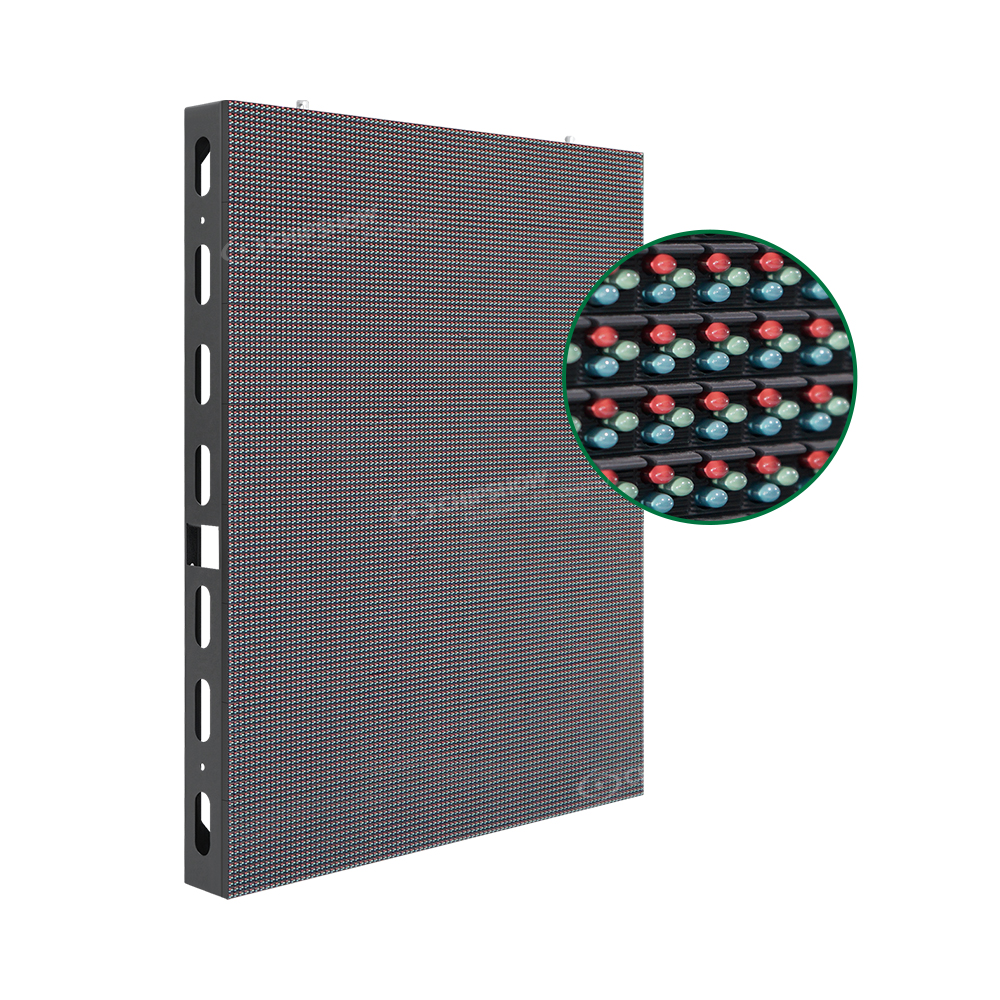
Chipshow as a Leading Gantry VMS Manufacturer: Highway LED Screens with EN 12966 Optical Class for Fixed Installations

SHENZHEN, GUANGDONG, CHINA, August 21, 2026 /EINPresswire.com/ -- For highway authorities and integrators comparing a Leading VMS Manufacturer, Chipshow addresses gantry VMS requirements with the fixed-installation C-Tra-KXB platform rather than a portable traffic sign. The current C-Tra-KXB specification covers P16 through P33.33 pixel pitches, delivering 12,000–20,000 nits of brightness through precision lens optics that achieve ≥200 m dynamic and ≥250 m static visibility. Complemented by the July 2026 EN 12966 certification update—which documents C2, L3, R3, and B6 optical classes at the 20 mm assessment scope—this platform provides a clear, verifiable basis for fixed highway specification and rigorous certificate matching.
Fixed Gantry VMS Serves Permanent Mainline Highway Messaging
The engineering mandate for the C-Tra-KXB Gantry VMS is centered entirely on permanent, overhead installation across motorways and dual carriageways. Unlike temporary roadside signs that prioritize mobility, fixed gantry systems are designed for continuous, long-term traffic guidance. This distinction means that procurement and deployment must account for heavy civil engineering, robust steel gantry fabrication, and permanent hardwired communication interfaces long before the displays are activated.
Industry guidelines explicitly separate these permanent gantry-mounted signs from the trailer-mounted portable units used for roadworks and emergency response. In a comprehensive highway solution, the C-Tra-KXB serves as the primary tool for long-distance traffic management. By aligning the product’s design with the realities of mainline highway infrastructure, agencies can focus their procurement logic on durability and centralized traffic management rather than the quick-deployment metrics used for temporary mobile displays.
C-Tra-KXB Uses DIP510 Optics for Long-Distance Legibility
Legibility at highway speeds in direct sunlight requires highly specialized optical engineering. The C-Tra-KXB addresses this challenge using advanced DIP510 optical lens technology, which concentrates light output to cut through intense ambient glare. The series encompasses P16, P20, P25, P31.25, and P33.33 configurations, offering structured specification tiers for different viewing distances and required character sizes.
Brightness and visibility are defined by precise, application-specific metrics rather than vague marketing terms. The P16 and P20 models deliver a standard 12,000 nits, while the P25 and P31.25 configurations can scale up to 20,000 nits for maximum punch. Crucially, the product specifications separate visibility into dynamic (≥200 m) and static (≥250 m) reading distances. This allows transportation authorities to evaluate legibility based on the actual movement of approaching vehicles, ensuring the display meets the rigorous optical demands of high-speed corridors.
Structural Weight, Sealing and Module Access Shape Installation Risk
The success of a fixed gantry project relies heavily on the physical characteristics of the display cabinet, which directly impact the structural load on the steel gantry and the frequency of disruptive lane closures for maintenance. The C-Tra-KXB utilizes a galvanized steel cabinet that keeps the structural weight below 60 kg/m². This lightweight profile reduces the mechanical stress on overhead trusses, simplifying the initial civil engineering requirements.
Environmental endurance and maintenance access are equally critical for permanent roadside exposure. The system features fully sealed modules with an IP65 front and IP54 rear protection rating, creating a definitive barrier against driving rain, dust, and aggressive road spray. When service is required, the independent module access design allows technicians to replace individual components without opening massive cabinet sections. This granular approach to maintenance minimizes the time crews spend working over active traffic lanes, significantly lowering long-term operational risks.
EN 12966 Optical Classes Require Exact Pitch-And-Certificate Matching
For European highway projects, EN 12966 certification is a stringent compliance baseline, but it must be applied with exact precision. Chipshow’s certification portfolio serves as strong evidence for fixed VMS compliance, provided the data is matched correctly to the deployed configuration. A certification update from July 2026, issued by DBI Certification A/S and tested by SGS-CSTC Guangzhou, explicitly added the 20 mm pixel pitch to the approved roster, which also covers 6.67 mm, 10 mm, and 16 mm models.
This 20 mm assessment details specific optical achievements, including colour class C2, luminance class L3, luminance ratio class R3, and beam width class B6. It also encompasses rigorous testing for uniformity, visible flicker, environmental endurance, and structural safety. Tender documents and procurement audits must align these exact optical classes and the certificate’s stated scope directly with the 20 mm pitch. Extending these specific ratings broadly across all pixel pitches without verifying the corresponding certificate attachments introduces unnecessary compliance risks.
Tender Readiness Extends Beyond Certification into ITS Integration
Holding a valid certification is only the first hurdle in highway VMS procurement; true tender readiness requires verifying how the display integrates into the broader Intelligent Transportation System (ITS). A comprehensive evaluation separates the display’s standards compliance and visual fit from its network integration capabilities. Procurement teams must confirm the exact standard set, review the physical display context, and then scrutinize how the controller and communications architecture will handshake with the agency’s existing ITS environment.
Fixed VMS networks are typically hardwired via fiber to a central Traffic Management Center (TMC). Therefore, the bid package must detail the communication interfaces, remote diagnostic tools, network routing, and specific field acceptance requirements. Addressing these integration demands alongside the physical product specifications—rather than treating them as an afterthought once the hardware is selected—prevents costly delays during the commissioning phase and ensures seamless traffic management control.
Custom Engineering Converts Gantry Specifications into Project-Ready Configurations
The ultimate value of a dedicated gantry manufacturer lies in its ability to translate standard platforms into site-specific engineering solutions. Operating with robust in-house R&D, Chipshow’s engineering team adapts the C-Tra-KXB platform to accommodate custom pixel pitches, bespoke cabinet dimensions, and specialized enclosure specifications. This flexibility is essential for navigating the unique gantry spans, structural interfaces, and environmental variables present at different highway sites.
The official configuration process requires concrete project inputs, including the exact installation width, height, target viewing distance, site conditions, and mounting methods. By driving the RFQ process with these site-specific parameters rather than generic model numbers, the manufacturer ensures that the final equipment matches the precise engineering demands of the installation. Planners and integrators can initiate this structured specification path by visiting https://www.chipshow.com/ to connect their permanent gantry requirements with verified, project-ready configurations.
Fixed Gantry VMS Serves Permanent Mainline Highway Messaging
The engineering mandate for the C-Tra-KXB Gantry VMS is centered entirely on permanent, overhead installation across motorways and dual carriageways. Unlike temporary roadside signs that prioritize mobility, fixed gantry systems are designed for continuous, long-term traffic guidance. This distinction means that procurement and deployment must account for heavy civil engineering, robust steel gantry fabrication, and permanent hardwired communication interfaces long before the displays are activated.
Industry guidelines explicitly separate these permanent gantry-mounted signs from the trailer-mounted portable units used for roadworks and emergency response. In a comprehensive highway solution, the C-Tra-KXB serves as the primary tool for long-distance traffic management. By aligning the product’s design with the realities of mainline highway infrastructure, agencies can focus their procurement logic on durability and centralized traffic management rather than the quick-deployment metrics used for temporary mobile displays.
C-Tra-KXB Uses DIP510 Optics for Long-Distance Legibility
Legibility at highway speeds in direct sunlight requires highly specialized optical engineering. The C-Tra-KXB addresses this challenge using advanced DIP510 optical lens technology, which concentrates light output to cut through intense ambient glare. The series encompasses P16, P20, P25, P31.25, and P33.33 configurations, offering structured specification tiers for different viewing distances and required character sizes.
Brightness and visibility are defined by precise, application-specific metrics rather than vague marketing terms. The P16 and P20 models deliver a standard 12,000 nits, while the P25 and P31.25 configurations can scale up to 20,000 nits for maximum punch. Crucially, the product specifications separate visibility into dynamic (≥200 m) and static (≥250 m) reading distances. This allows transportation authorities to evaluate legibility based on the actual movement of approaching vehicles, ensuring the display meets the rigorous optical demands of high-speed corridors.
Structural Weight, Sealing and Module Access Shape Installation Risk
The success of a fixed gantry project relies heavily on the physical characteristics of the display cabinet, which directly impact the structural load on the steel gantry and the frequency of disruptive lane closures for maintenance. The C-Tra-KXB utilizes a galvanized steel cabinet that keeps the structural weight below 60 kg/m². This lightweight profile reduces the mechanical stress on overhead trusses, simplifying the initial civil engineering requirements.
Environmental endurance and maintenance access are equally critical for permanent roadside exposure. The system features fully sealed modules with an IP65 front and IP54 rear protection rating, creating a definitive barrier against driving rain, dust, and aggressive road spray. When service is required, the independent module access design allows technicians to replace individual components without opening massive cabinet sections. This granular approach to maintenance minimizes the time crews spend working over active traffic lanes, significantly lowering long-term operational risks.
EN 12966 Optical Classes Require Exact Pitch-And-Certificate Matching
For European highway projects, EN 12966 certification is a stringent compliance baseline, but it must be applied with exact precision. Chipshow’s certification portfolio serves as strong evidence for fixed VMS compliance, provided the data is matched correctly to the deployed configuration. A certification update from July 2026, issued by DBI Certification A/S and tested by SGS-CSTC Guangzhou, explicitly added the 20 mm pixel pitch to the approved roster, which also covers 6.67 mm, 10 mm, and 16 mm models.
This 20 mm assessment details specific optical achievements, including colour class C2, luminance class L3, luminance ratio class R3, and beam width class B6. It also encompasses rigorous testing for uniformity, visible flicker, environmental endurance, and structural safety. Tender documents and procurement audits must align these exact optical classes and the certificate’s stated scope directly with the 20 mm pitch. Extending these specific ratings broadly across all pixel pitches without verifying the corresponding certificate attachments introduces unnecessary compliance risks.
Tender Readiness Extends Beyond Certification into ITS Integration
Holding a valid certification is only the first hurdle in highway VMS procurement; true tender readiness requires verifying how the display integrates into the broader Intelligent Transportation System (ITS). A comprehensive evaluation separates the display’s standards compliance and visual fit from its network integration capabilities. Procurement teams must confirm the exact standard set, review the physical display context, and then scrutinize how the controller and communications architecture will handshake with the agency’s existing ITS environment.
Fixed VMS networks are typically hardwired via fiber to a central Traffic Management Center (TMC). Therefore, the bid package must detail the communication interfaces, remote diagnostic tools, network routing, and specific field acceptance requirements. Addressing these integration demands alongside the physical product specifications—rather than treating them as an afterthought once the hardware is selected—prevents costly delays during the commissioning phase and ensures seamless traffic management control.
Custom Engineering Converts Gantry Specifications into Project-Ready Configurations
The ultimate value of a dedicated gantry manufacturer lies in its ability to translate standard platforms into site-specific engineering solutions. Operating with robust in-house R&D, Chipshow’s engineering team adapts the C-Tra-KXB platform to accommodate custom pixel pitches, bespoke cabinet dimensions, and specialized enclosure specifications. This flexibility is essential for navigating the unique gantry spans, structural interfaces, and environmental variables present at different highway sites.
The official configuration process requires concrete project inputs, including the exact installation width, height, target viewing distance, site conditions, and mounting methods. By driving the RFQ process with these site-specific parameters rather than generic model numbers, the manufacturer ensures that the final equipment matches the precise engineering demands of the installation. Planners and integrators can initiate this structured specification path by visiting https://www.chipshow.com/ to connect their permanent gantry requirements with verified, project-ready configurations.
Shenzhen Chip Optech Co., Ltd.
Chipshow
email us here
Visit us on social media:
LinkedIn
Instagram
Facebook
YouTube
TikTok
X
Legal Disclaimer:
EIN Presswire provides this news content "as is" without warranty of any kind. We do not accept any responsibility or liability for the accuracy, content, images, videos, licenses, completeness, legality, or reliability of the information contained in this article. If you have any complaints or copyright issues related to this article, kindly contact the author above.