

Custom Lightweight Supercritical Insoles for Performance Footwear Brands
Procurement teams and product managers frequently encounter complex technical specifications during initial component development. Mismatched foam densities can cause premature flattening under dynamic load, while incorrect thickness gradients alter the intended heel-to-toe drop of the shoe. Furthermore, inadequate thermal stability during mass molding can lead to unexpected mold shrinkage and dimensional variation across production lots. Solving these sourcing challenges requires a structured engineering approach that aligns raw polymer selection with specific performance metrics. By controlling every variable during component development, footwear brands ensure that mass-produced shoes deliver the exact biometric support promised during early prototyping.
Engineering Core Parameters: Density, Thickness Profiling, and Biomechanical Arch Ergonomics
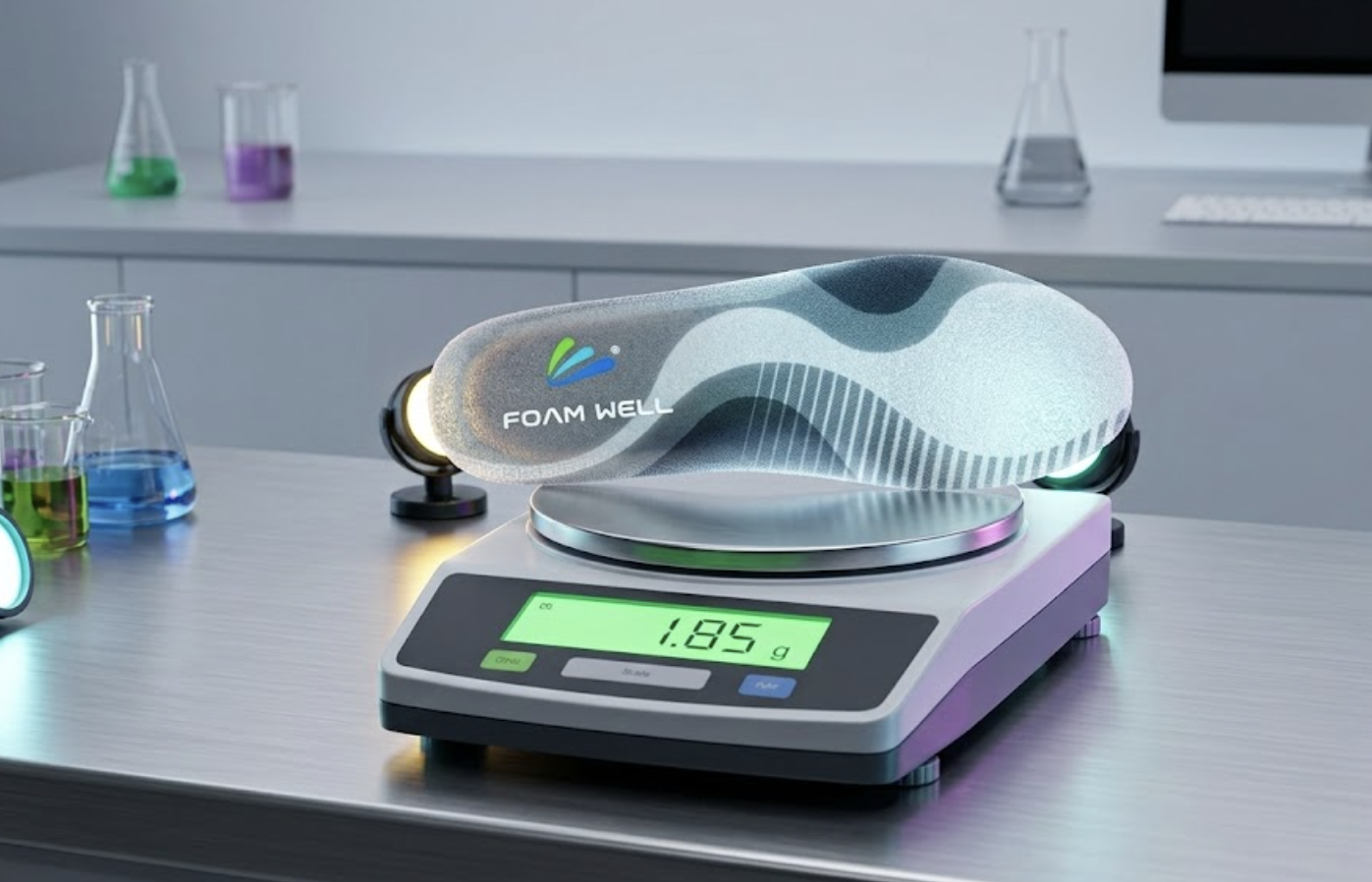
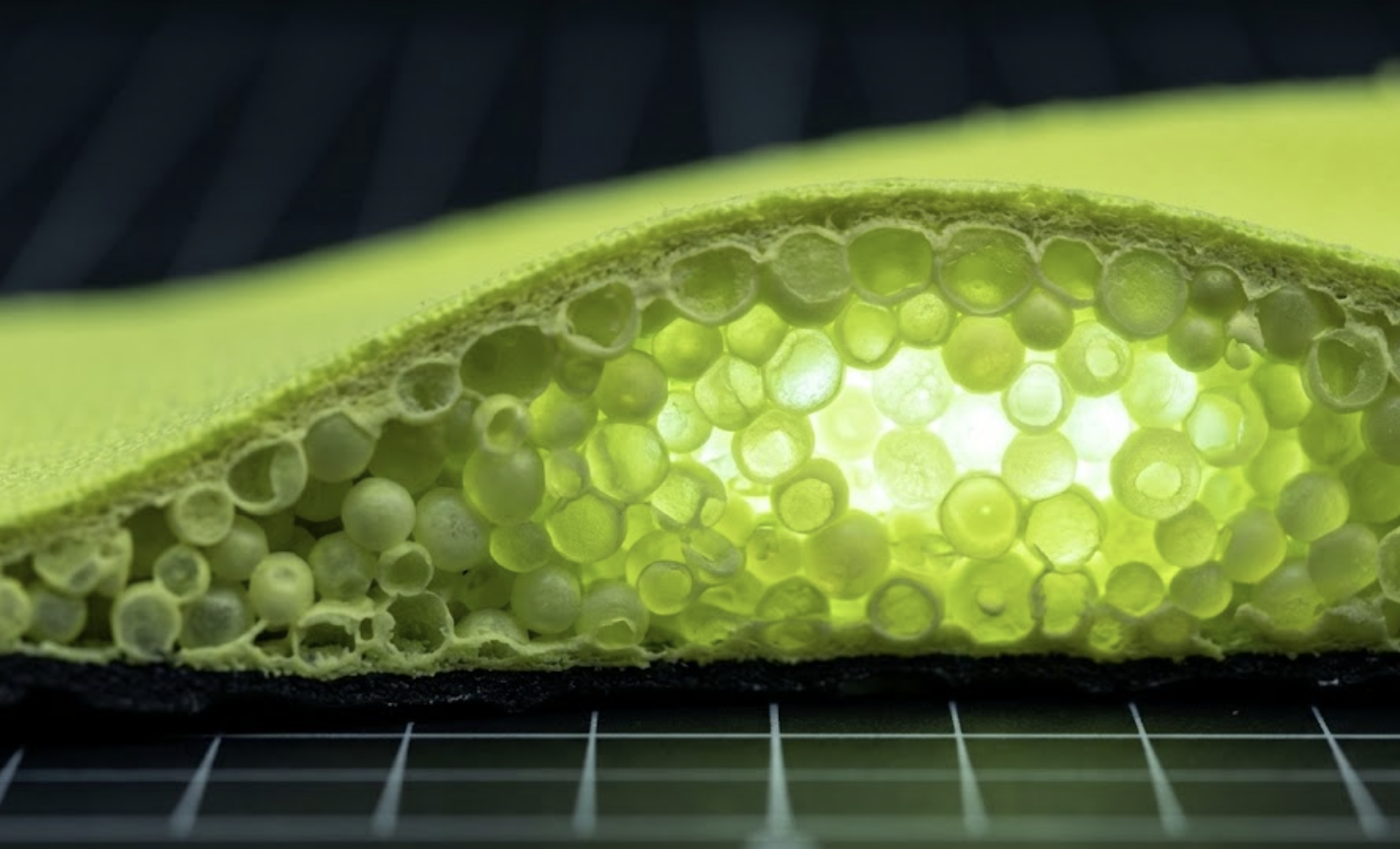
Fine-tuning a custom supercritical footbed requires precise control over three foundational physical parameters: foam density, thickness profiling, and biomechanical arch contours. Density calibration directly dictates both component weight and structural durability. Material engineers regulate physical supercritical expansion ratios using precise gas saturation and temperature controls. By achieving low densities, such as 0.08 to 0.15 g/cm3, developers reduce total shoe weight significantly without causing cell collapse or structural breakdown under repeated footstrikes.
Thickness profiling demands equal engineering precision to maintain correct internal shoe volume and proper heel positioning. Product designers establish distinct thickness gradients from the deep heel cup to the forefoot bevel. For instance, a deep heel cup stabilizes the calcaneus during initial ground contact, whereas a tapered forefoot maintains optimal toe clearance and flexibility during push-off. In addition, midfoot arch ergonomics require careful durometer selection across functional zones. Engineers customize hardness levels, typically ranging from 35 to 55 Asker C or Shore C, to match specific footwear categories. Applying a higher durometer along the medial arch provides structural resistance against overpronation, while a softer durometer under the metatarsal heads cushions impact during propulsion.
Material Matrix Selection: Matching Supercritical EVA, EVA Air 2.0, and ETPU Boost to Target Categories
Selecting the appropriate polymer matrix represents a critical milestone in the custom footwear development pipeline. Different athletic categories demand distinct combinations of weight, elasticity, and abrasion resistance. Supercritical EVA formulations, such as the Leap-E60 compound, excel in competitive racing and high-performance road running applications. This physical nitrogen-blown material delivers high rebound resilience alongside a featherlight structure, helping runners conserve metabolic energy over extended race distances.
Conversely, lifestyle sneakers and daily casual performance footwear prioritize soft step-in comfort and ultra-low swing weight. For these categories, ultra-lightweight compounds like EVA Air 2.0 provide an exceptional balance of low density and plush cushioning. This specialized formulation minimizes component mass while retaining good dimensional stability for daily wear. Meanwhile, high-impact athletic categories, including basketball, cross-training, and heavy-duty work footwear, require superior localized energy return and durability. Expanded thermoplastic polyurethane (ETPU) Boost foams offer outstanding fatigue resistance and high resilience. Incorporating ETPU inserts into forefoot and heel strike zones absorbs heavy vertical impact forces and delivers persistent dynamic cushioning throughout rigorous athletic use.
The Prototyping-to-Production Pipeline: Overcoming Scaling Bottlenecks in OEM/ODM Development
Transitioning a custom footbed concept from initial digital CAD drawings to mass production demands a streamlined, error-free engineering pipeline. Component manufacturers like Foamwell eliminate development bottlenecks through agile OEM and ODM workflows. Technical teams transform brand specification sheets into 3D CAD models and initial tooling paths within three to five days. Following digital CAD approval, rapid prototyping units carve physical molds and produce functional sample pairs in five to seven days, allowing brand developers to evaluate fit, hardness, and last compatibility rapidly.
Empirical lab testing plays a decisive role in validating sample performance before scaling to commercial production. A dedicated in-house testing laboratory subjects sample lots to comprehensive physical testing protocols. Technical specialists measure dynamic compression set, split tear strength, abrasion resistance, and rebound elasticity using standardized industry methods. This rigorous evaluation ensures that the sample formulation meets strict durability targets and international standards, including ISO and GRS compliance. Once validation concludes, bulk production facilities execute high-volume manufacturing orders within thirty to thirty-five days, maintaining consistent physical dimensions and durometer targets across large production volumes.
Strategic Supply Chain Synergy: Global Footwear Sourcing and Multi-National Factory Integration
Global footwear brands require resilient manufacturing networks that adapt smoothly to changing international trade dynamics and regional delivery requirements. Operating specialized manufacturing centers in Dongguan, China; Hai Phong and Binh Duong, Vietnam; and Brebes, Indonesia, component suppliers provide essential strategic flexibility to global procurement teams. This multi-national footprint allows footwear brands to source high-performance insoles near their primary assembly factories, drastically reducing shipping lead times and international freight expenditures.
In addition, multi-facility operations help brands optimize tariff strategies and mitigate regional supply chain disruptions. Procurement directors benefit from unified quality management systems that operate consistently across every factory location. Whether manufacturing takes place in China, Vietnam, or Indonesia, technical teams enforce identical raw material inspection protocols, molding parameters, and final quality assurance standards. This multi-regional redundancy protects production schedules during peak seasonal demand and secures reliable component delivery for global brand launches.
Conclusion: Accelerating Time-to-Market with Engineered Supercritical Partnerships
Custom supercritical insoles give performance footwear brands a distinct competitive advantage in an increasingly technical marketplace. By mastering key engineering parameters, selecting category-specific polymer formulations, and leveraging agile OEM/ODM manufacturing networks, footwear developers can create superior products that exceed consumer expectations.
Collaborative material engineering transforms initial design ideas into commercial realities with exceptional speed and precision. Footwear procurement managers, product developers, and sourcing directors can streamline their supply chains and elevate product performance by partnering with experienced component specialists.
Discover complete custom engineering capabilities, material parameter sheets, and B2B prototyping services at https://www.foam-well.com/.
Foamwell Limited
Foamwell Limited
+ +86 13549380132
email us here
Legal Disclaimer:
EIN Presswire provides this news content "as is" without warranty of any kind. We do not accept any responsibility or liability for the accuracy, content, images, videos, licenses, completeness, legality, or reliability of the information contained in this article. If you have any complaints or copyright issues related to this article, kindly contact the author above.
